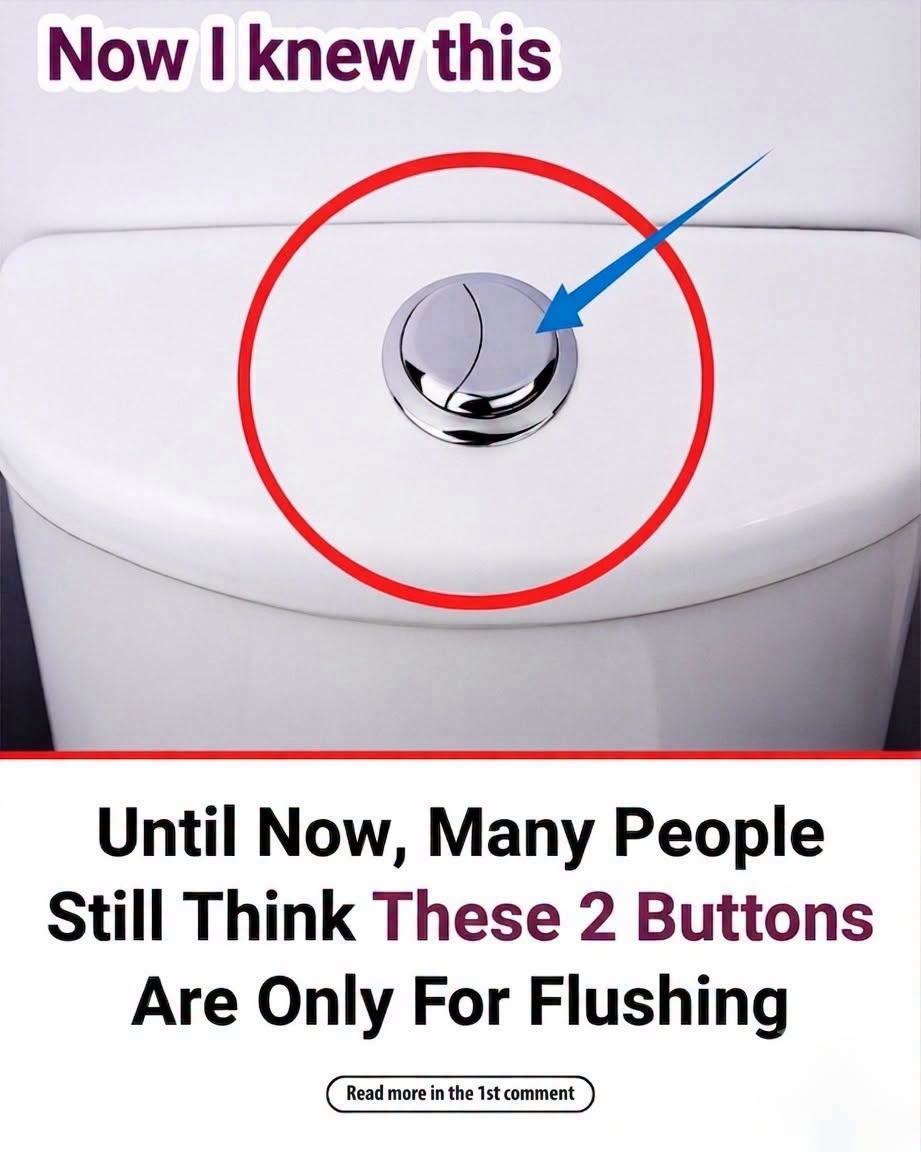

For homes that pay metered water bills, using less water may also help reduce utility costs. It can also cut down the amount of wastewater that needs to be handled by local systems, which is one reason these toilets became popular in places focused on water conservation.
The concept behind dual-flush toilets is not new. Designer Victor Papanek discussed the idea of using different amounts of water for different types of waste in his 1976 book Design for the Real World. Australia later became an early adopter in the 1980s, when water-saving designs became especially important during drought concerns.
Since then, dual-flush toilets have spread around the world. They are now a standard feature in many modern bathrooms, but the design only works as intended when people understand how to use it.
So the next time you see two buttons on top of a toilet tank, take a second before pressing. That small choice can help save water, reduce waste, and possibly trim household costs over the long run.
