
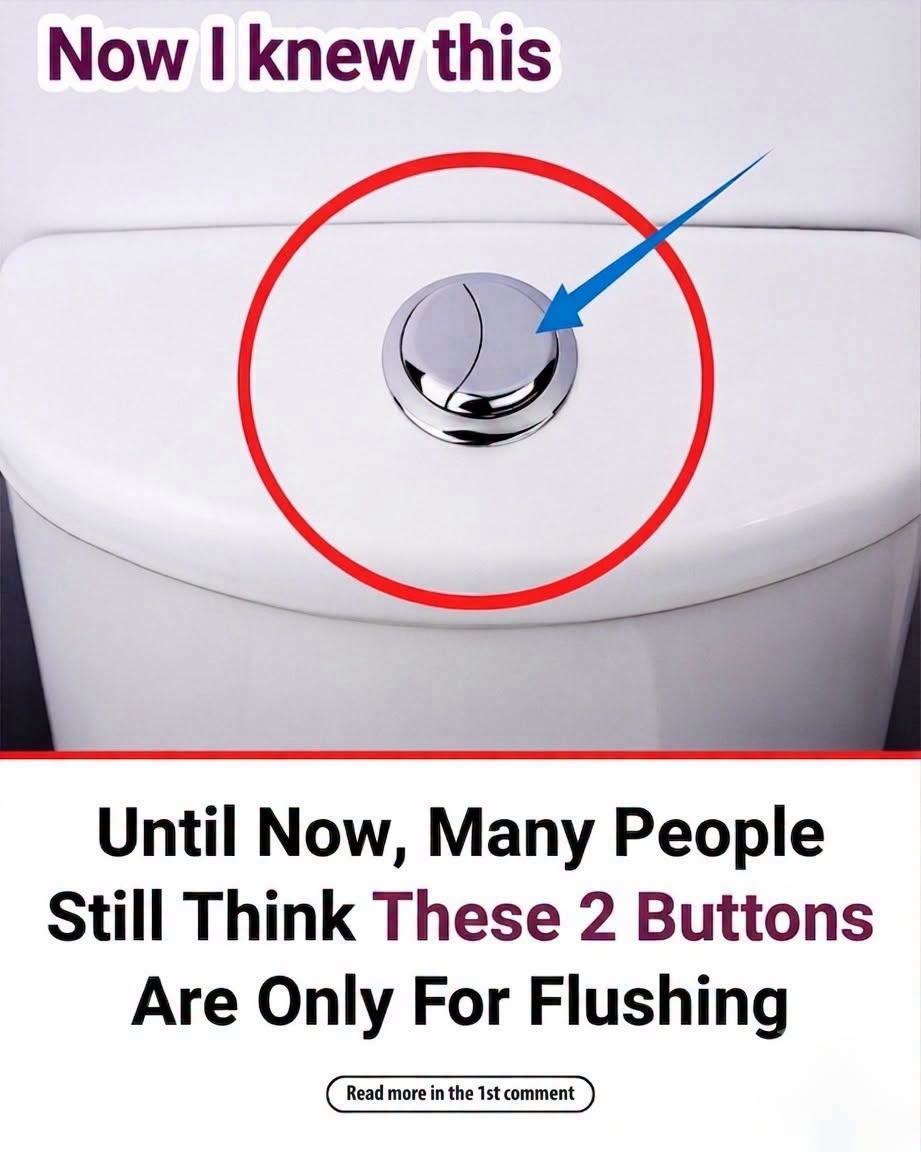
If you have ever stood in a bathroom wondering which toilet button to press, you are not alone. Dual-flush toilets are now common in homes, offices, restaurants, hotels, and public buildings, yet many people still treat the two buttons as if they do the same thing.
They do not. Those buttons are designed to control how much water is released with each flush, and choosing the right one can make a real difference over time.
What the Two Buttons Are For
On most dual-flush toilets, the smaller button is meant for a smaller flush. It usually releases less water and is intended for liquid waste. The larger button provides a stronger flush and is typically used for solid waste.
The exact amount of water depends on the toilet model. A smaller flush may use around 3 to 4.5 liters of water, while a larger flush may use about 6 to 9 liters. The idea is simple: use only the amount of water needed for the job.
Some toilets make this easy with clear size differences between the buttons. Others use symbols, such as half circles, full circles, or water drops. That is where confusion often starts. If the markings are unclear, the easiest rule to remember is: small button means smaller flush, large button means larger flush.
Why This Matters
A single flush may not seem like much, but toilets are used many times a day in a typical household. Pressing the full-flush button every time can send far more clean water down the drain than necessary.
According to the original estimate, a dual-flush toilet can save a household up to 20,000 liters of water per year compared with a traditional toilet. Actual savings will vary by toilet model, household size, and usage habits, but the basic benefit is clear: less water used per flush can mean lower household water consumption.
