
Clean sponge pieces can be used for children’s craft projects under adult supervision. Avoid giving small pieces to young children who might put them in their mouths.
If a sponge is still in good condition and has not been used on contaminated surfaces, it may be reassigned to a less sensitive cleaning job. Clearly separate it from sponges used for dishes, countertops, or other food-contact areas.
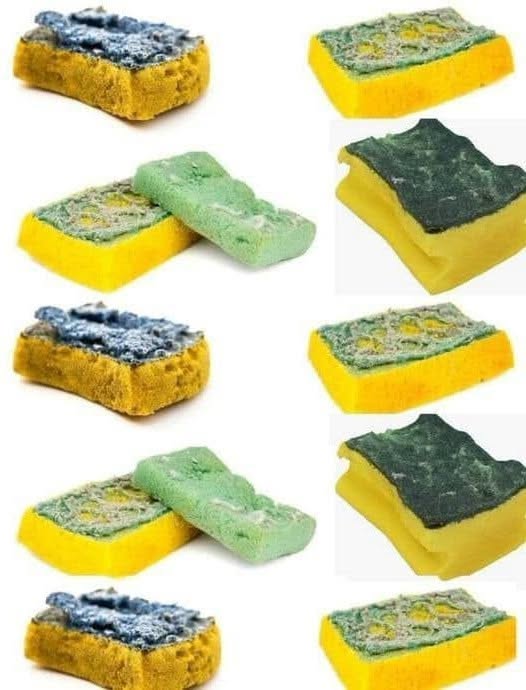
Not every sponge deserves a second life. Kitchen sponges can harbor microorganisms, especially when they remain damp and contain food residue.
Replace a sponge if it smells unpleasant, is falling apart, has visible mold, or has been used to clean raw meat juices or other contaminated material. Do not rely on rinsing or microwaving a worn-out sponge to make it reliably safe.
Never reuse a sponge that has absorbed bleach, drain cleaner, pesticides, or other hazardous chemicals for gardening, crafts, or household tasks.
Old sponges may be useful for small cleaning jobs and DIY projects, but they are not worth risking your family’s hygiene. Reuse only clean, suitable sponges for non-food tasks, and dispose of heavily soiled or damaged ones responsibly.
A little creativity can reduce household waste—but safety should always come first.
Which of these sponge-reuse ideas would you try at home? Share your own practical household tips in the comments.
