
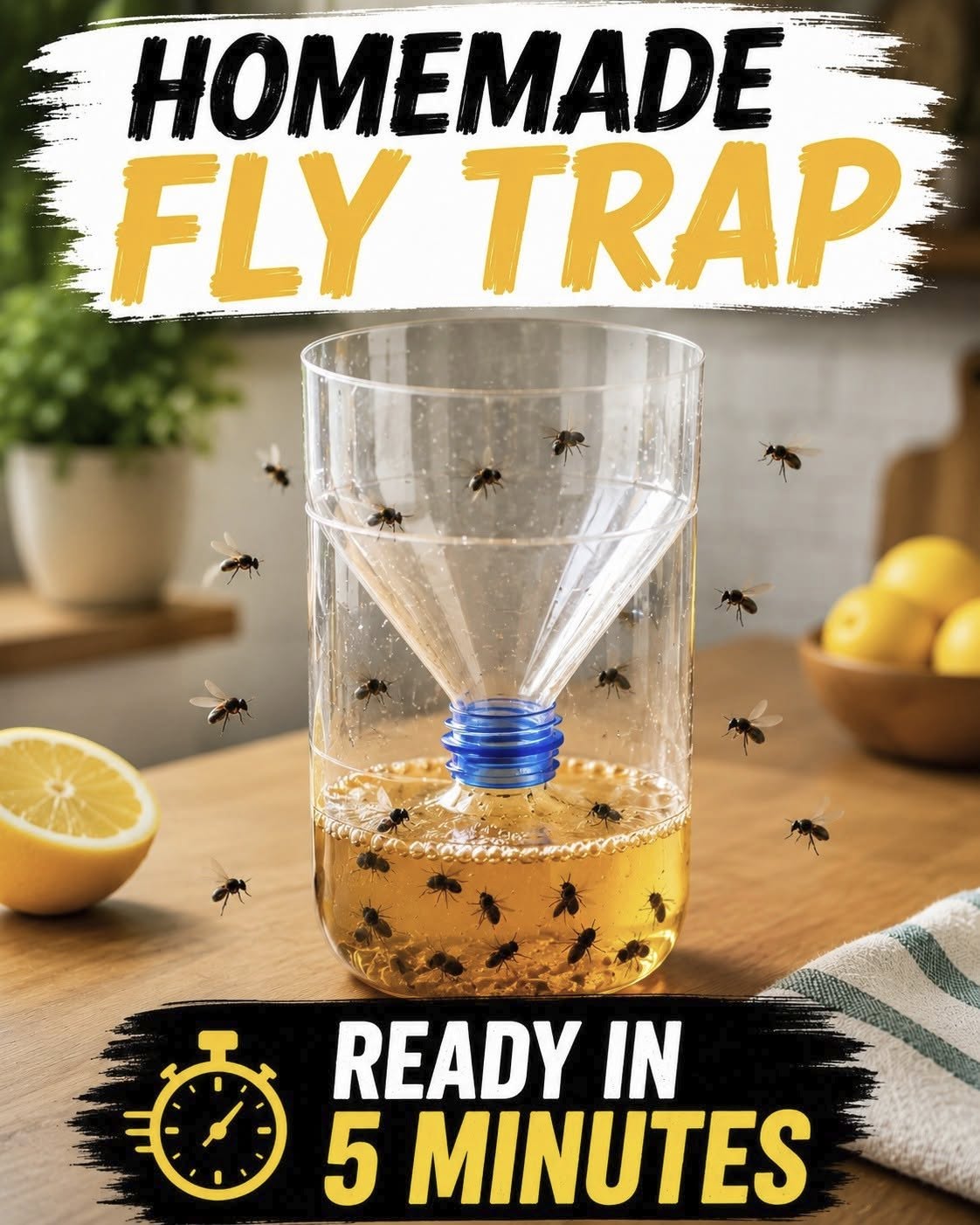
Why This Simple Trap Can Work
The trap combines several things that can attract fruit flies: a sweet smell, fermentation, and an easily accessible liquid surface.
Once a fly enters through one of the small openings, the combination of the container and soapy liquid can make it difficult for the insect to escape.
This method is particularly useful for fruit flies, which are much smaller than the common housefly. If you’re dealing with larger houseflies, a vinegar trap may be less effective.
How to Make It More Effective
The trap works best when you also remove the sources attracting flies in the first place.
Keep ripe fruit covered or refrigerated, clean food spills promptly, rinse bottles and cans before placing them in recycling, and empty kitchen garbage regularly.
Don’t forget about drains. Organic material inside a drain can sometimes provide a food source for small flies, so keeping sinks and drains clean can help reduce recurring problems.
If you have several areas with flies, you can make more than one trap and place them where activity is highest.
How Long Should You Leave It Out?
You can leave the trap in place for a day or two and replace the mixture when necessary. If the liquid becomes dirty or loses its smell, prepare a fresh batch.
For a persistent infestation, however, a homemade trap should be viewed as one part of the solution rather than the only solution. Identifying and removing the source of the flies is usually the most important step.
A Quick and Inexpensive Household Solution
With just a container, apple cider vinegar, sugar, and a few drops of dish soap, you can create a simple homemade fly trap in about five minutes.
It costs very little, requires no complicated equipment, and can be especially handy when small fruit flies suddenly appear in the kitchen. Pairing the trap with good food-storage and cleaning habits can help keep your home less attractive to unwanted flying pests.
