
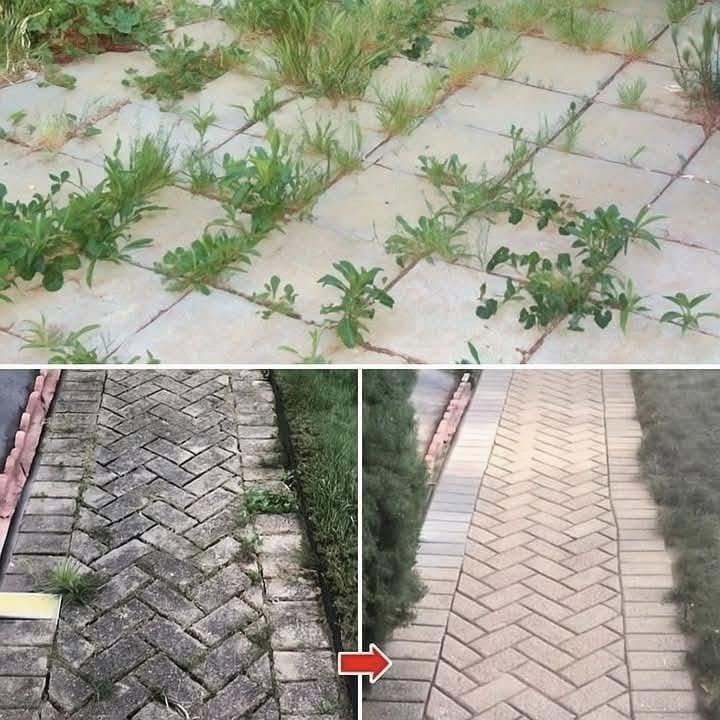
Weeds growing between patio stones, paving bricks, and cracks in walkways can make even a well-maintained outdoor space look neglected. They can also spread quickly if they are allowed to mature and produce seeds.
The good news is that you don’t necessarily need harsh commercial weed killers to reduce unwanted growth. With a combination of manual removal, household methods, and a few simple prevention techniques, you can keep many paved areas looking much cleaner naturally.
Start by Removing Existing Weeds
Before applying any natural treatment, remove as much of the existing weed as possible.
Pull weeds from the base and try to remove the roots, particularly when the soil is loose enough to make this possible. A narrow weeding tool, old screwdriver, or patio scraper can help remove plants growing tightly between paving stones.
For larger areas, brushing the joints with a stiff outdoor brush can loosen small weeds and remove some of the accumulated soil in which they are growing.
Removing the visible plants first gives any follow-up treatment a better chance of working.
Try Boiling Water
One of the simplest chemical-free methods is boiling water.
Carefully pour freshly boiled water directly over weeds growing in cracks and between paving stones. The heat can damage the plant’s leaves and tissues, causing it to wilt.
This method is especially useful for small areas because you can target individual weeds without spraying the surrounding pavement.
However, take care around desirable plants. Boiling water does not distinguish between weeds and plants you want to keep.
Use Vinegar Carefully
White vinegar is another commonly used household option for unwanted weeds.
A vinegar solution can damage the foliage of plants it contacts, making it useful for treating weeds growing through cracks in hard surfaces.
However, vinegar isn’t selective. It can also damage grass, flowers, vegetables, and other plants, so avoid spraying it near vegetation you want to keep.
It’s also important to understand that vinegar may not permanently kill established perennial weeds because their roots can survive and produce new growth.
Don’t Rely on Salt
Salt is sometimes recommended as a natural weed killer, but it should be used with caution—or avoided altogether in garden areas.
Although salt can damage plants, it can also accumulate in the soil and make the area unsuitable for other plants. Rain can also move dissolved salt into nearby soil where it may affect desirable vegetation.
For patios and walkways, mechanical removal followed by prevention is generally a better long-term approach.
Prevent Weeds From Coming Back
