
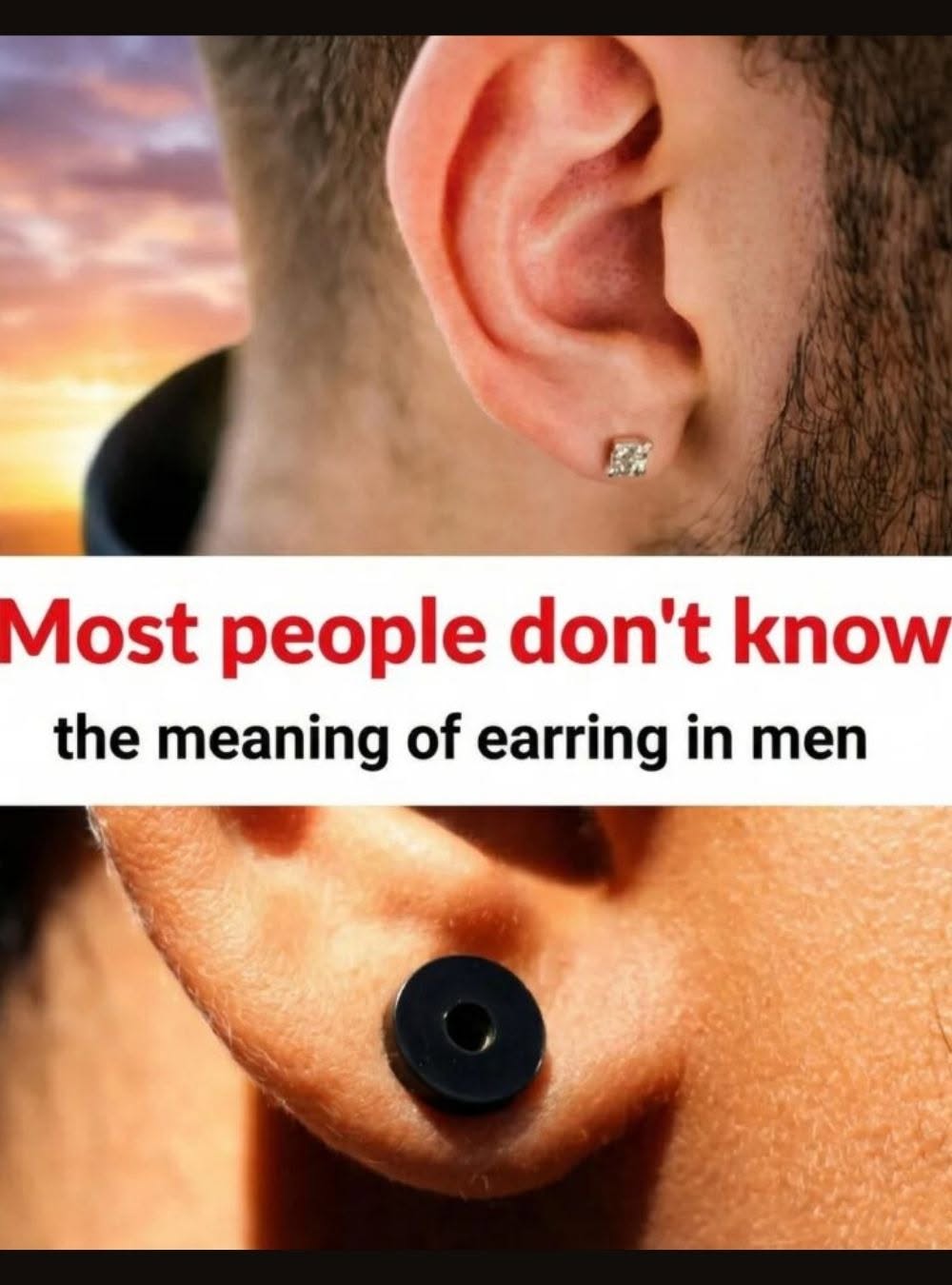
Earrings may look like a simple fashion choice today, but their meaning runs far deeper than most people realize. When you notice a man wearing an earring—whether it’s a subtle stud, a bold hoop, or a carefully selected gemstone—there is often a story behind it. Across cultures and centuries, earrings have carried messages about status, identity, spirituality, and personal expression. What began as an ancient symbol worn by warriors, leaders, and sacred figures has evolved into a modern accessory shaped by culture, creativity, and individuality. Once you understand this long history, something we see every day suddenly takes on a whole new significance.
In some of the world’s earliest civilizations—including Egypt, Greece, Rome, and numerous Indigenous cultures—earrings worn by men were powerful markers of identity. A pair of gold hoops might signal high status, exceptional bravery, or ancestral lineage. In African, Native American, and South Asian communities, earrings often held ceremonial or protective meaning. They marked rites of passage, honored ancestors, or served as spiritual shields. Many of these traditions continue today, reminding us that earrings are far more than decoration—they are cultural emblems tied to heritage, pride, and belonging.
Spiritual symbolism has also shaped the tradition. In Hindu culture, the Karnavedha ear-piercing ceremony is performed on boys and girls alike, symbolizing purification, protection, and the opening of spiritual channels. In traditional Chinese practices, certain points on the ear are believed to correspond with energy pathways throughout the body, leading some to view piercings as a way to restore balance or support well-being. While interpretations differ, these beliefs highlight how earrings have long been intertwined with ritual, healing, and personal development.
